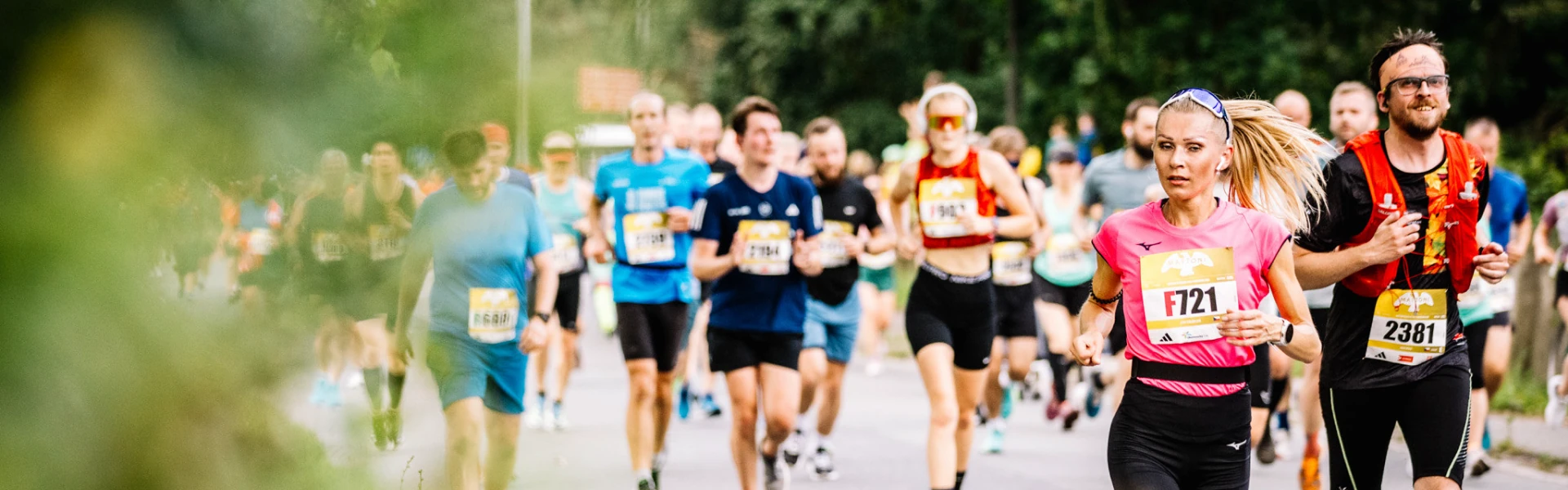
The points of interest along the race course are mentioned below, arranged following the course from start to finish.
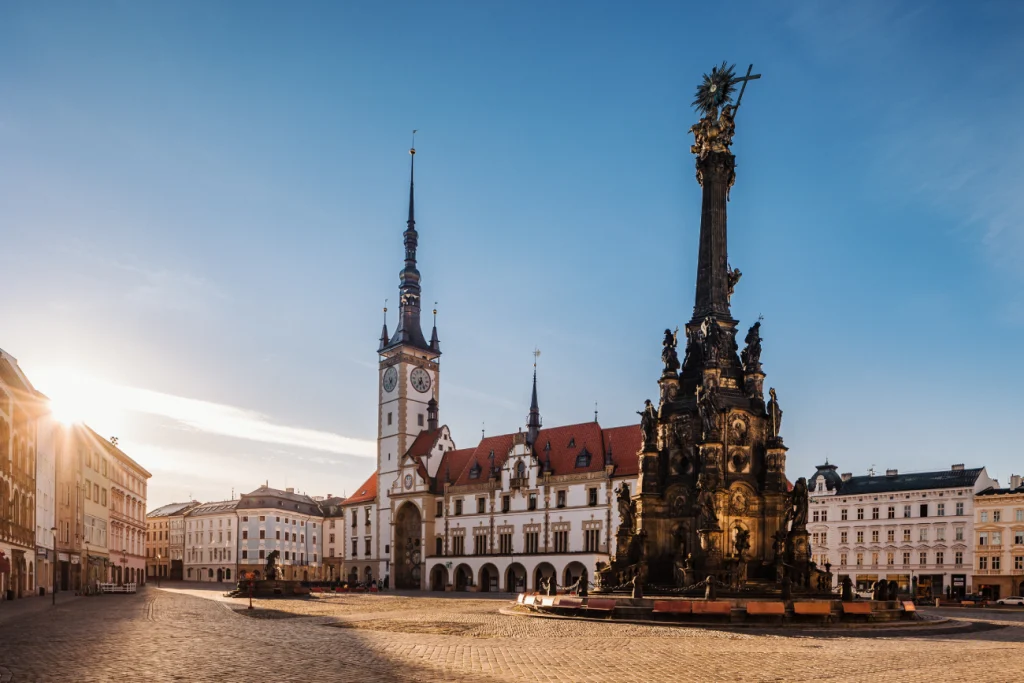
The Holy Trinity Column, inscribed on the UNESCO World Heritage List since 2000, features the largest group of Baroque statues within a single monument in Central Europe. Standing 32 meters tall, it houses a small chapel at its base. This magnificent landmark is currently undergoing renovation.
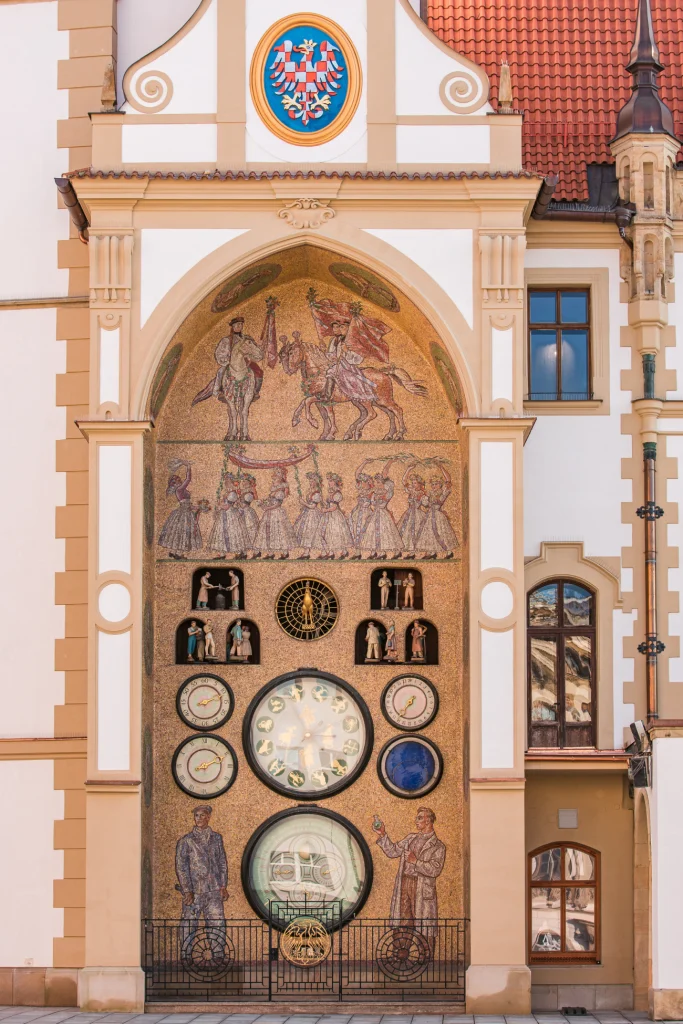
Dominating the Upper Square, the Olomouc Town Hall has symbolized the economic and political prominence of the former royal capital for six centuries. The four-wing building features an inner courtyard, with the bay window of the Gothic Chapel of St. Jerome projecting from its southern facade. Next to the town hall tower is the Astronomical Clock, whose chimes play every day at noon. Its current appearance dates back to the 1950s and reflects the official aesthetic of Socialist Realism of that era.
Originally a Baroque building, this complex was rebuilt in 1810 into five-sided, neoclassical barracks. Stables once occupied the entire ground floor, and the complex served as a base for an artillery regiment. Its importance declined after other modern barracks were built in Olomouc, but it remained in military use until 2006, when it was sold into private hands.
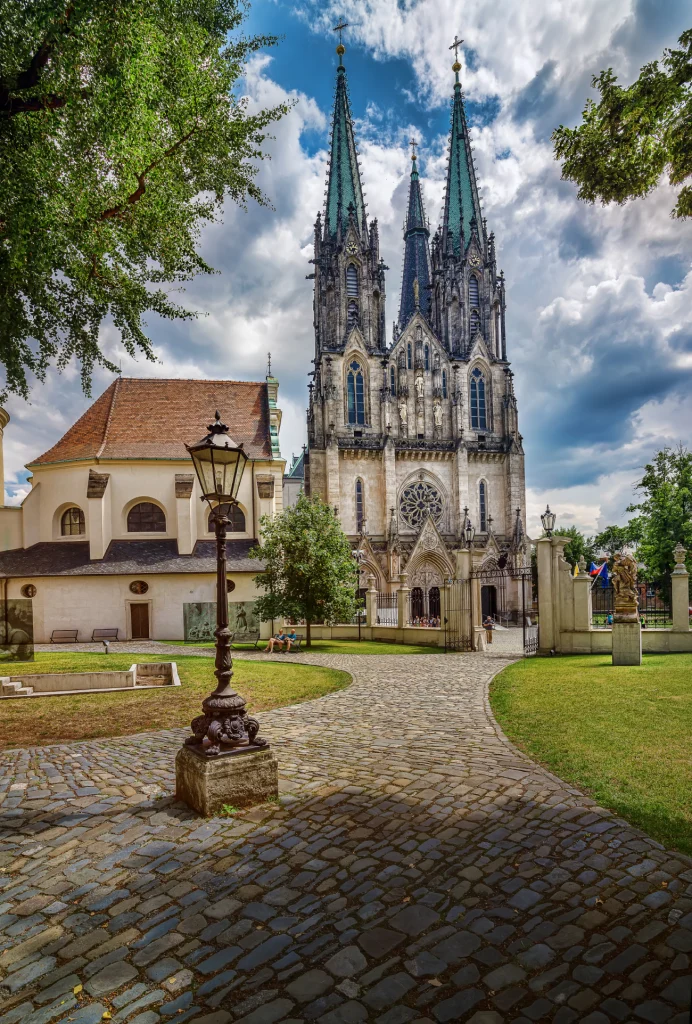
Remnants of the medieval castle’s fortifications can still be seen from the park below the cathedral. In 1306, Wenceslas III, the last king of the Přemyslid dynasty, was assassinated here. Over time, the castle was abandoned and transformed into a religious seat. Today, the area is dominated by the Neo-Gothic St. Wenceslas Cathedral with its double-tower facade. Its third, southern tower stands exactly 100.65 meters tall, making it the highest church tower in Moravia.
Opened in 1979, this stadium has a seating capacity of 3,000 spectators.
Moravian Business College Olomouc (MVŠO)
A private higher education institution based in the modern high-rise building of the BEA campus Olomouc.
The Olomouc main railway station is located in the Hodolany district, about 2.5 km from the Upper Square. It is well-connected to the city center and other districts by regular tram and bus lines.
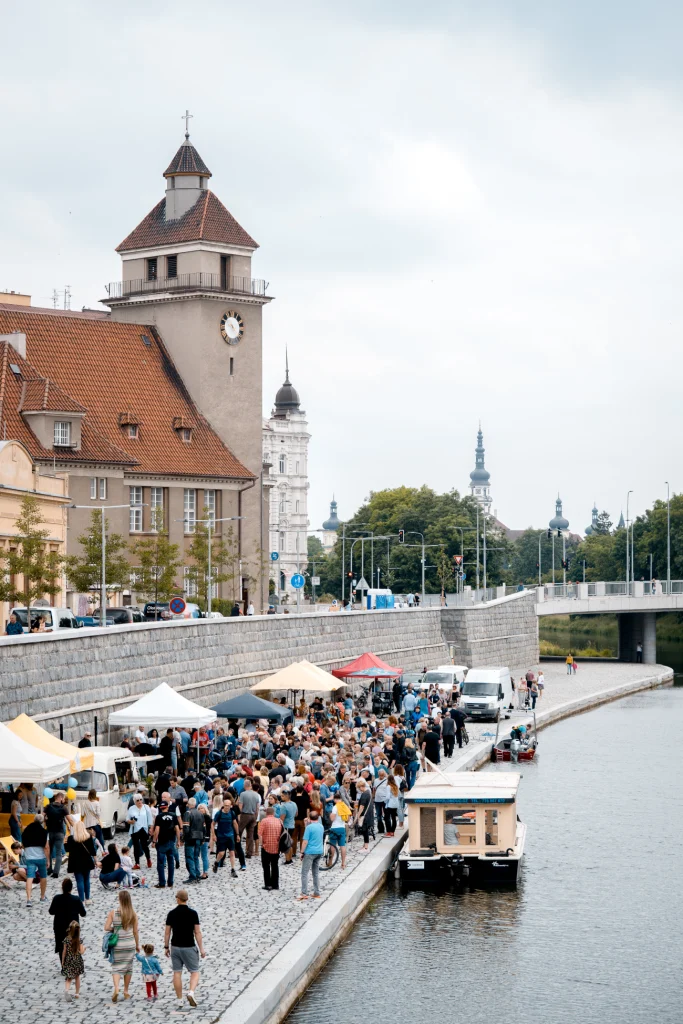
Standing above the Morava River at the intersection of Husova and Blahoslavova streets, this Evangelical church was built following disputes between Czech and German congregations
over the use of the nearby “Red Church.” The Evangelical Church of Czech Brethren broke ground during the opening days of World War I. The church—complete with several halls for Sunday school, youth groups, and Bible studies—was not completed until 1920. Today, the lively Olomouc riverside promenade (náplavka) stretches right below it.
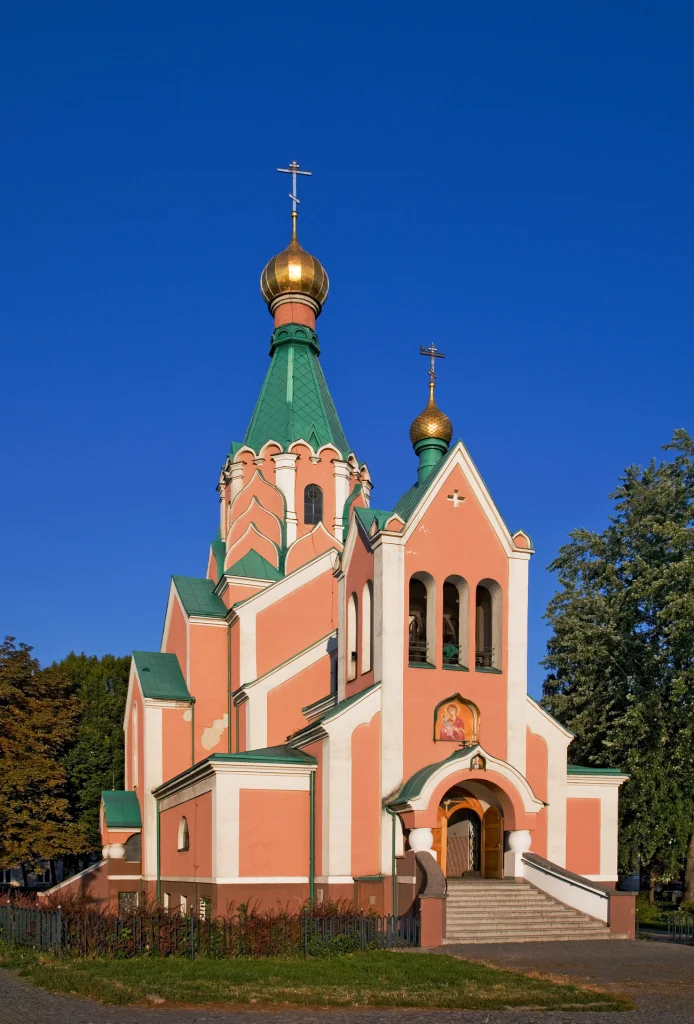
The Church of St. Gorazd is a freestanding, symmetrical, and intricately structured building. It features an octagonal tower topped by a gilded onion dome with a cross. A painting of St. Gorazd rests in a niche above the entrance, while an icon of the Mother of God is set into the belfry wall above the vestibule. The design was inspired by traditional Byzantine-style architecture of Russian origin.
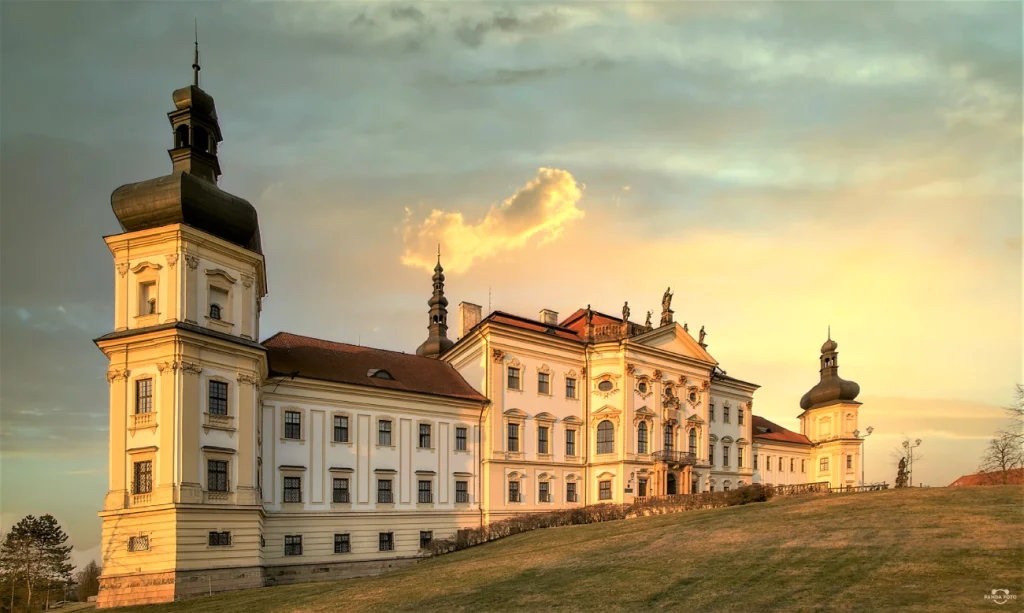
Spanning more than one hectare on the left bank of the Morava River, this vast complex was originally a Premonstratensian monastery. Today, this National Cultural Monument serves as a military hospital.
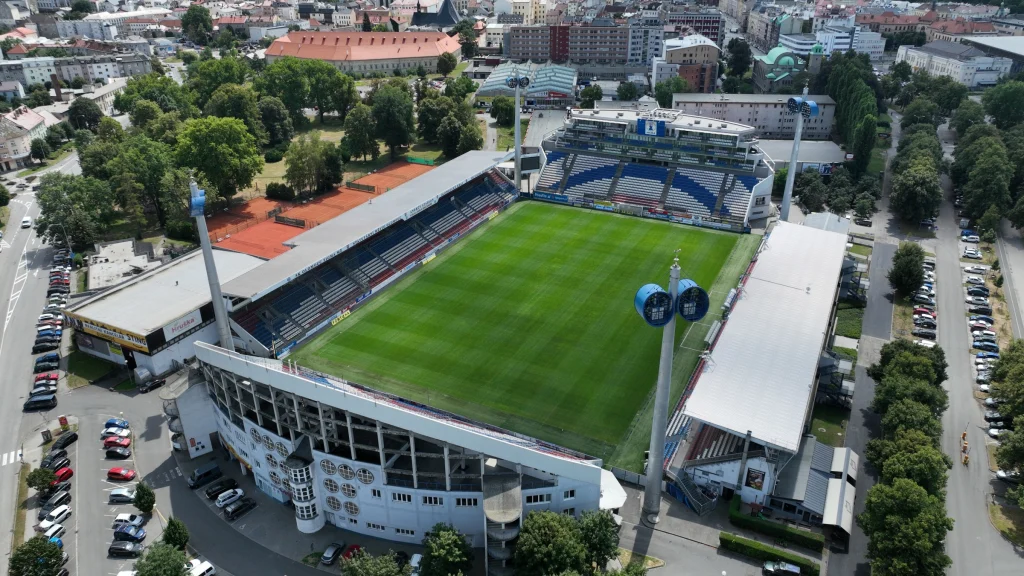
Andrův Stadion is a football stadium primarily hosting the home matches of SK Sigma Olomouc, though it is also used for the Czech national team’s games. With a seating capacity of 12,566, it was named after the prominent Olomouc wholesaler, Josef Ander.
This top-tier equestrian facility located in Olomouc–Lazce hosts prestigious national and international show jumping competitions across all categories.
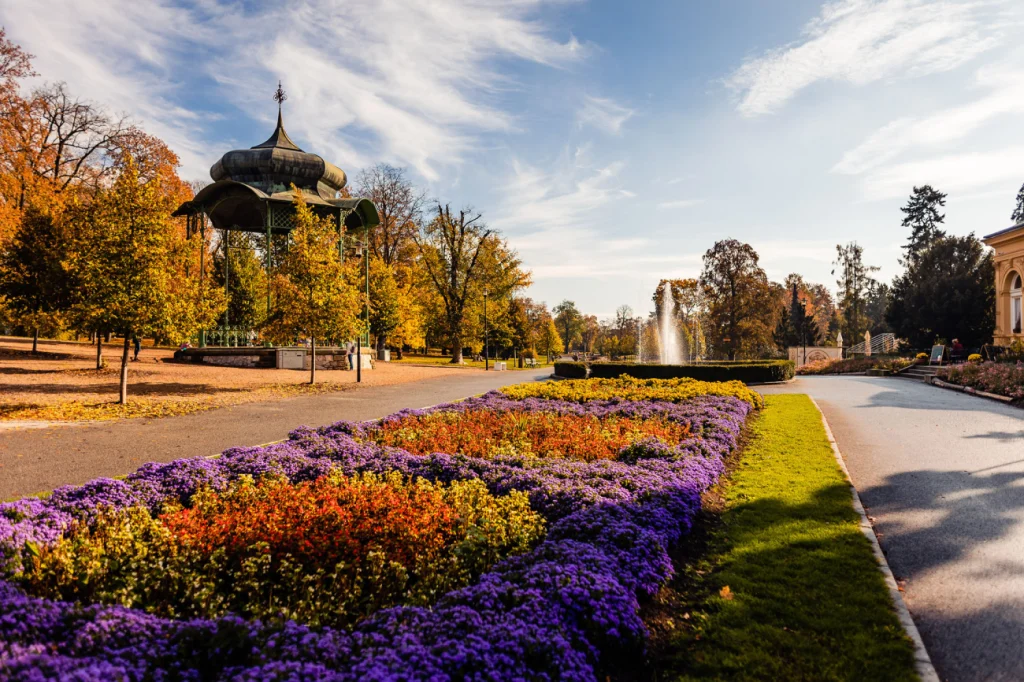
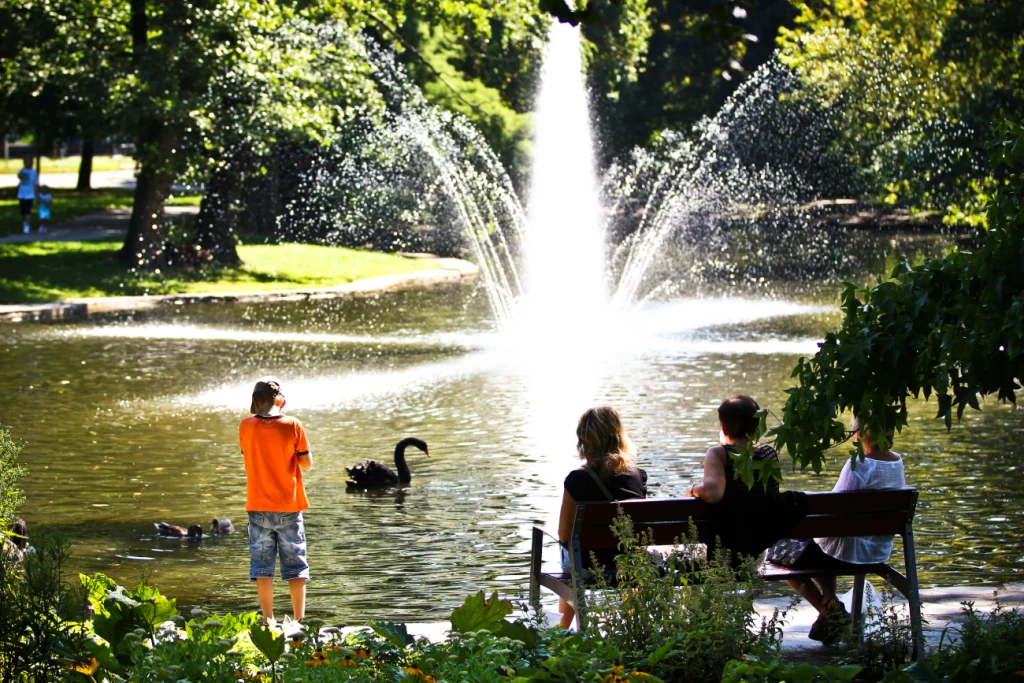
Smetana Park is the oldest and largest park in Olomouc, situated on the western edge of the city center and covering roughly 19 hectares. Its defining architectural feature is the Rudolf Alley. This was the city’s very first public park area; the tree-lined alley was commissioned back in 1820 by the Archbishop of Olomouc, Archduke Rudolf of Austria.
Located near the city center, Galerie Šantovka was built on the brownfield site of a former food processing plant. This shopping and entertainment center opened to the public in 2013, offering around 200 shops and 1,000 parking spaces.
The St. Maurice Parish Church is one of the most precious Late Gothic structures in Moravia. Two asymmetrical rectangular towers flank its western facade, and a unique double spiral staircase is nestled against the western wall. Inside, visitors can admire the famous 1745 Maurice organ, crafted by the master organ builder Michael Engler.
Text and photo: Department of Culture and Tourism, Olomouc City Hall