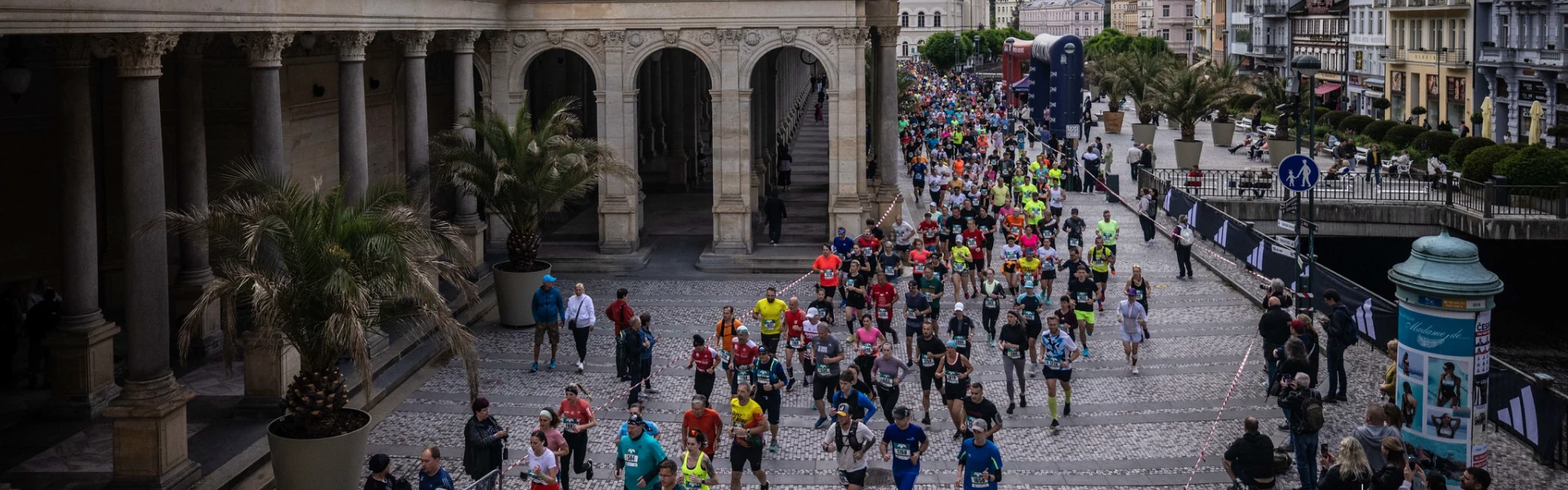
The points of interest along the race course are mentioned below, arranged following the course from start to finish.
The central municipal spa complex offers the widest range of 60 therapeutic treatments, wellness services, and swimming pool facilities.
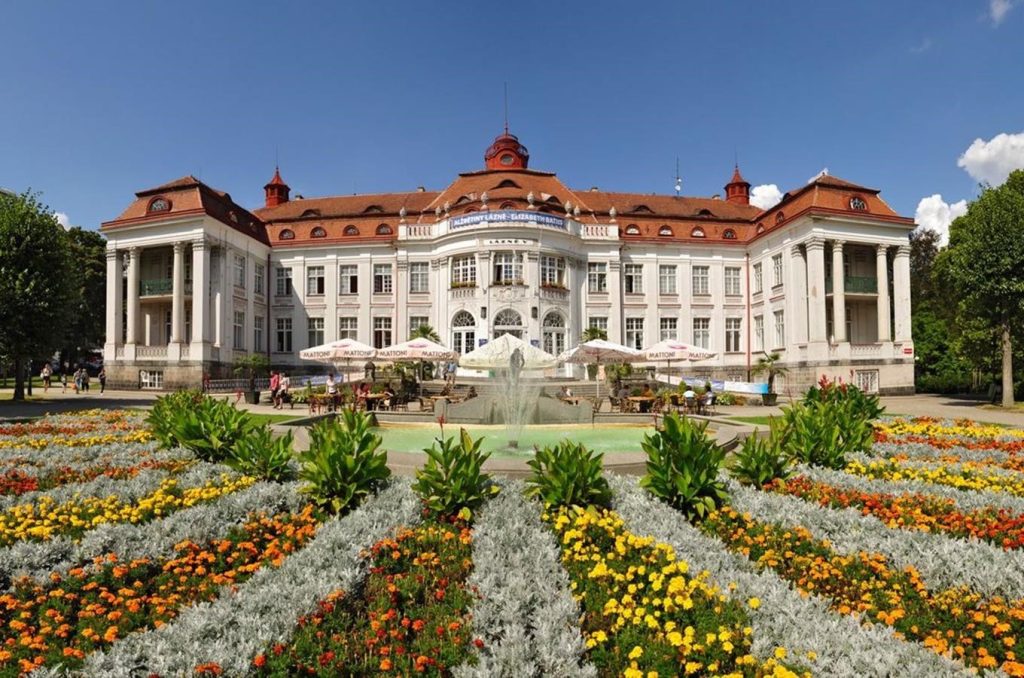
Smetanovy sady was established at the turn of the 19th and 20th centuries on the site of the former Emperor Franz Joseph I Park, where a municipal tree nursery had originally been located. Between 1905 and 1906, Alžbětiny lázně was built here, accompanied by a representative park designed in a historicizing French style.
To this day, the park has preserved its original appearance and atmosphere. The dominant features of the area are the pseudo-Baroque Alžbětiny lázně and a fountain with a sculpture of a girl by sculptor Břetislav Benda. A four-row avenue of shaped lime trees leads to the spa building, creating impressive green walls. Pathways lined with benches offer a pleasant place to relax in the centre of Karlovy Vary.
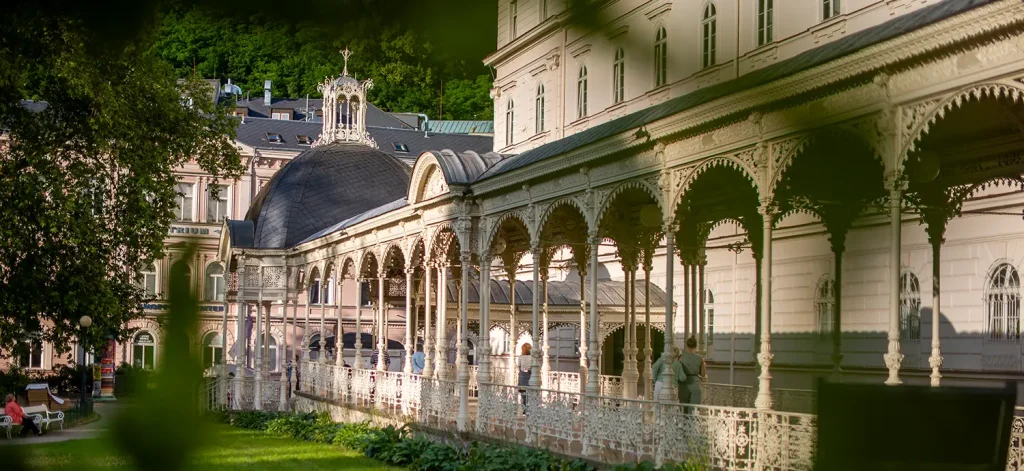
Sadová kolonáda is the remaining part of the former Blanenský Pavilion, an elegant spa complex built between 1880 and 1881 according to the designs of architects Ferdinand Fellner and Hermann Helmer. The cast-iron colonnade formed part of an extensive promenade veranda in today’s Dvořákovy sady and served as a concert and restaurant venue.
After most of the complex was demolished in 1965, only the eastern wing was preserved, now known as Sadová kolonáda. At the beginning of the 21st century, the colonnade underwent a complete reconstruction, during which the Hadí Spring was reopened to the public. The colonnade also provides access to the Sadový Spring, located in the basement of the Military Spa Institute.
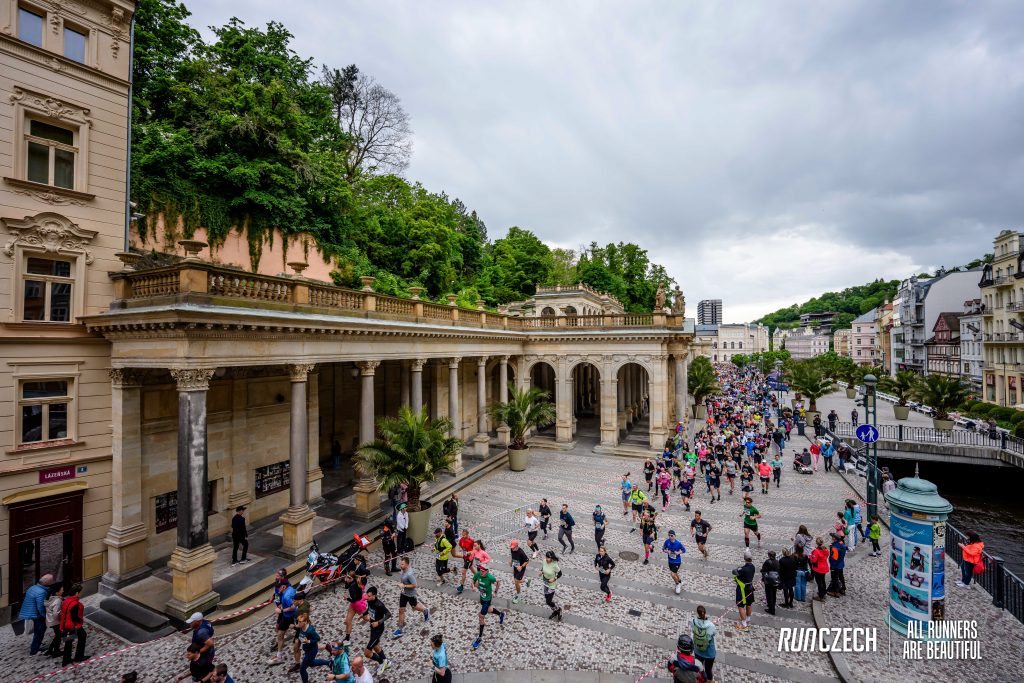
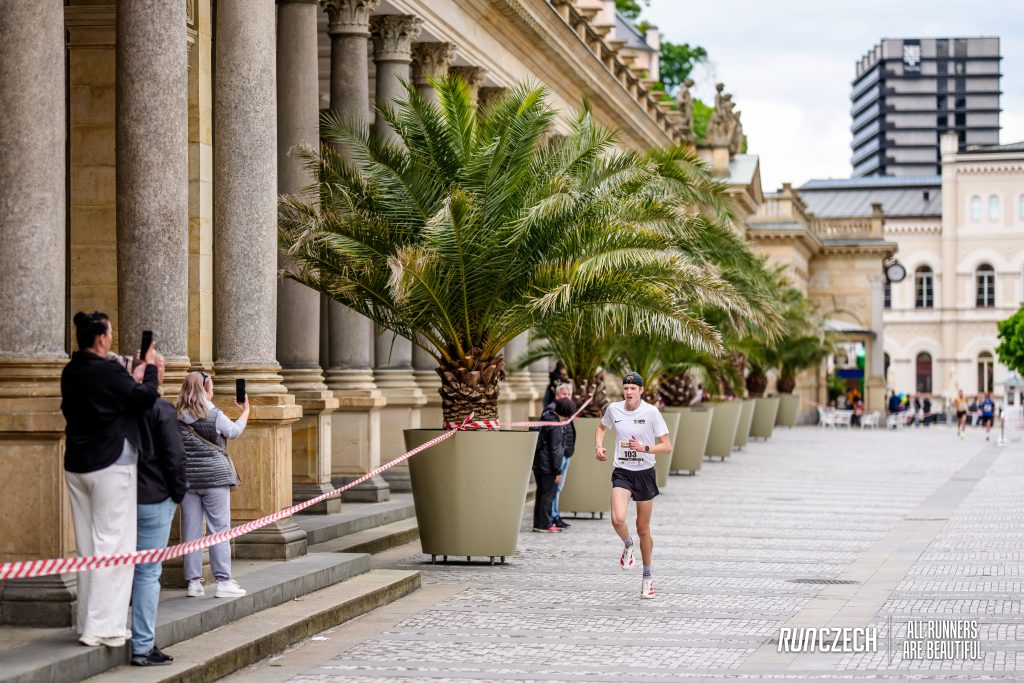
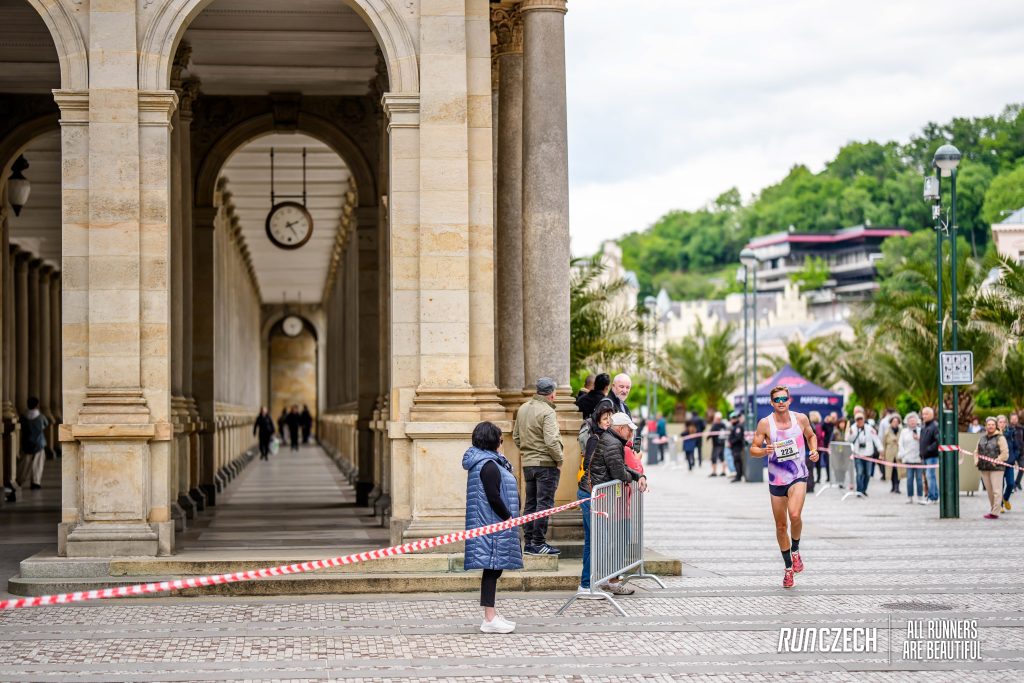
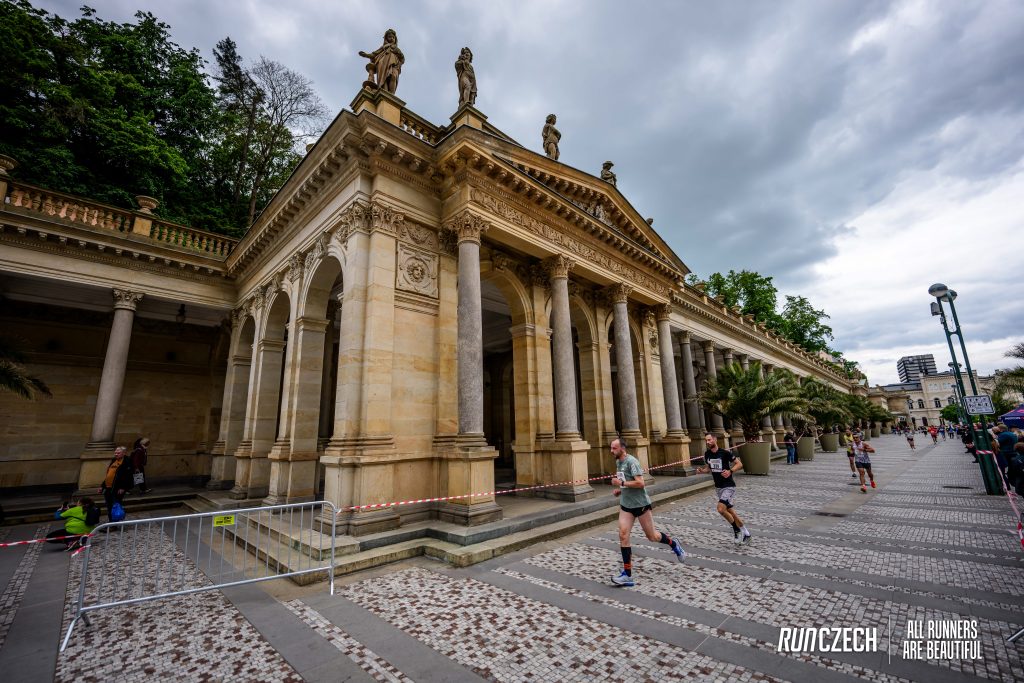
Mlýnská kolonáda is one of the most important symbols of Karlovy Vary. Its history dates back to the end of the 18th century, when the first wooden promenade hall was built above the New Spring, allowing spa guests to stay near the springs even during bad weather. The current monumental pseudo-Renaissance colonnade was constructed between 1871 and 1881 according to the design of architect Josef Zítek.
The largest colonnade in Karlovy Vary houses five mineral springs – the Mill Spring, Rusalka Spring, Prince Wenceslas Spring, Libuše Spring, and the Rock Spring. Its attic is decorated with twelve allegorical statues representing the months of the year, while the interior is complemented by reliefs created by sculptor Václav Lokvenc. Owing to its architecture and atmosphere, Mlýnská kolonáda ranks among the most visited places in the spa town.
Dvořákovy sady was established at the end of the 19th century according to the design of gardener Jan Hahmann, who created a representative urban park featuring diverse greenery, flower beds, water features, and promenades. The park also included the Blanenský Pavilion by architects Ferdinand Fellner and Hermann Helmer, from which only the Sadová kolonáda has survived to this day.
In 1974, the park underwent extensive renovation and was named after composer Antonín Dvořák, whose monument stands there today. Dvořákovy sady is now one of the most popular places for relaxation in the centre of Karlovy Vary and is also home to two protected plane trees more than 200 years old.
The Castle Spring is one of the important mineral springs of Karlovy Vary, and its history dates back to 1769, when it was discovered beneath Zámecká věž in the historic centre of the town. Its use for spa treatment purposes was recommended by physician David Becher, who carried out its chemical analysis. Over time, pavilions and colonnades were built above the spring, culminating in the construction of the representative Art Nouveau Zámecká kolonáda between 1910 and 1912, designed by Viennese architect Johann Friedrich Ohmann.
The colonnade also featured the monumental relief Spirit of the Springs by sculptor Wenzel Hejda. At the turn of the millennium, the building underwent extensive reconstruction and was transformed into the modern therapeutic facility known as Castle Spa. Today, only the pavilion with the Upper Castle Spring is accessible to the public, while the Lower Castle Spring has been redirected to the area of the Market Colonnade.
Zámecká věž is one of the oldest landmarks in Karlovy Vary and the last surviving remnant of a Gothic castle built in the 14th century by Emperor Charles IV. After several devastating fires, the tower was gradually rebuilt and from the 17th century served as the town watchtower. Later, it was complemented by an arcaded gallery from which distinguished guests were ceremonially welcomed and the spa season officially opened.
Today, Zámecká věž offers visitors a UNESCO exhibition dedicated to the Great Spa Towns of Europe, which have been inscribed on the UNESCO World Heritage List since 2021. The building also includes a café serving specialty coffee from a local roastery and offering pleasant seating with views over the historic centre of Karlovy Vary.
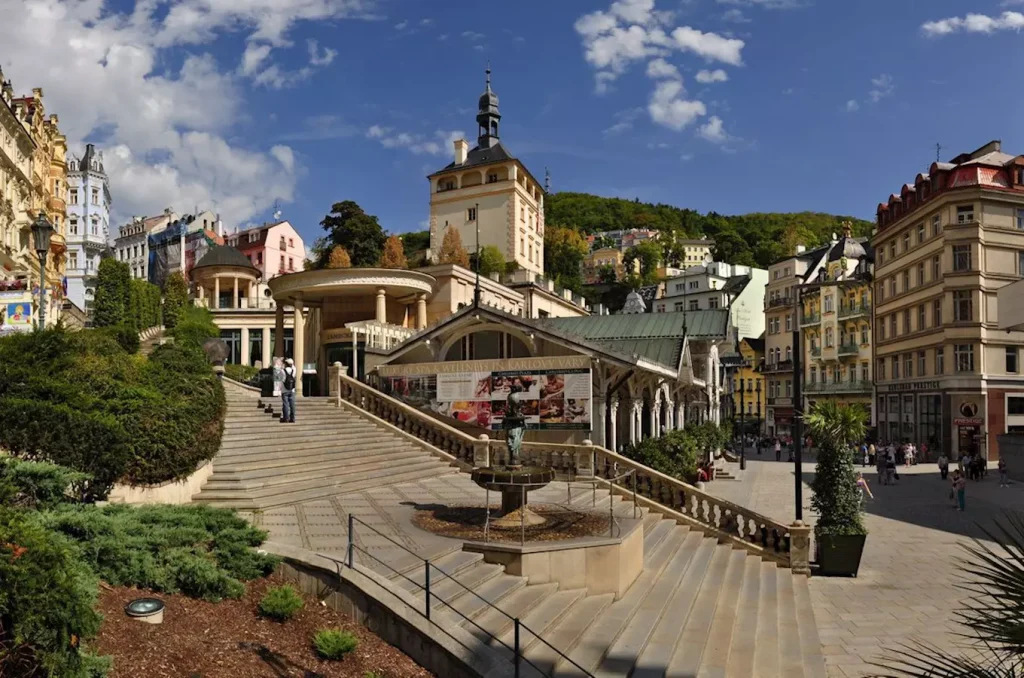
Tržní kolonáda stands in the historic centre of Karlovy Vary beneath Zámecká věž, on a site closely connected with the origins of spa treatment in the town. According to legend, Emperor Charles IV treated his ailing limbs here at the then-called Žrout Spring, today known as the Charles IV Spring. Originally, only simple pavilions and promenade halls stood above the springs.
The current wooden colonnade, designed in the Swiss chalet style, was built between 1882 and 1883 according to the designs of architects Ferdinand Fellner and Hermann Helmer. Although the richly decorated structure was originally intended as a temporary building, it became one of the symbols of Karlovy Vary. Inside the colonnade rise three mineral springs – the Charles IV Spring, the Lower Castle Spring, and the Market Spring.
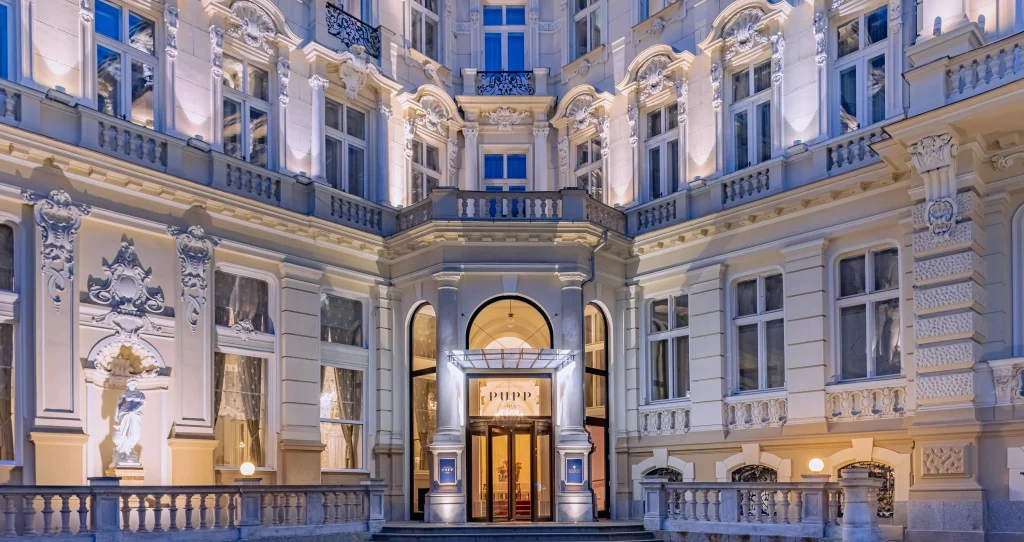
Grandhotel Pupp is an iconic five-star hotel located in the historic centre of Karlovy Vary, with a tradition dating back to 1701. This architectural gem, offering 228 rooms, is situated just 300 metres from the spa colonnade and is internationally renowned for its unique atmosphere and genius loci. As a long-standing centre of social life and accommodation for film stars and distinguished guests from around the world, Grandhotel Pupp has become a true synonym for first-class hospitality and elegance.
Císařské lázně in Karlovy Vary was built between 1893 and 1895 according to the designs of the renowned Viennese architects Ferdinand Fellner and Hermann Helmer. This representative pseudo-Renaissance building, featuring elements of French Renaissance and Art Nouveau architecture, was considered one of the most modern spa facilities in the Austro-Hungarian Empire at the time. It offered exceptional comfort and advanced therapeutic technologies, including the Zander Hall for Swedish remedial gymnastics and the Peat Pavilion connected by an underground corridor.
From 1918 onwards, the building was known as Spa I and continued to serve therapeutic purposes until the late 1980s. Afterwards, the building gradually fell into disrepair until it was transferred to the Karlovy Vary Region in 2008. Today, this national cultural monument has been completely restored.
Galerie umění has been preserving, presenting, and promoting 20th-century Czech art since 1953 through permanent exhibitions, temporary displays, and cultural-educational programmes. Its extensive collections include significant works of Czech painting and sculpture, some of which are permanently exhibited.
The exhibitions present the development of modern art from the symbolism and realism of artists such as Jakub Schikaneder, Jan Preisler, and Antonín Slavíček to avant-garde movements including Expressionism, Fauvism, Cubism, and Surrealism, represented by works of Josef Čapek, Emil Filla, Toyen, and Jindřich Štyrský.
Karlovarské městské divadlo presents audiences with the best productions from Czech theatre stages as well as works by domestic and international authors. The theatre’s interior is equally exceptional, with decoration created by renowned Viennese artists including the Klimt brothers and Franz Matsch. Its greatest treasure is the hand-painted theatre curtain depicting the celebration of poetic art, complemented by frescoes and ceiling paintings. The sculptural decoration was designed by Theodor Friedl, author of the sculptures of the muses and antique griffins. The atmosphere of the space is enhanced by original lighting fixtures and Rococo-style lamps designed by architects Ferdinand Fellner and Hermann Helmer.
The monument to Charles IV, founder of the spa town, stands in Sady Karla IV. in front of Císařské lázně in the centre of Karlovy Vary. The sandstone statue was created in 1955 by academic sculptor Otakar Švec, also known as the author of the Stalin monument in Prague’s Letná district. The ruler is depicted holding a crown, sceptre, and a model of a house. The statue stands on a high pedestal decorated with the town’s coat of arms. Although the monument was originally intended to become the main landmark of Karlovy Vary, today it remains somewhat overlooked by visitors.
Vřídelní kolonáda prošla během své historie několika proměnami. Nad vývěrem Vřídla nejprve stály jen lehké přístřešky a pavilony, které bylo možné po častých průvalech termální vody snadno obnovit. První významnější stavbou se stal barokní Vřídelní sál z roku 1774 a v roce 1826 vznikla první empírová kolonáda podle návrhu Josefa Esche.
Na konci 19. století ji nahradila litinová pseudorenesanční kolonáda od architektů Ferdinanda Fellnera a Hermanna Helmera, která však byla kvůli korozi později odstraněna. Současná funkcionalistická prosklená kolonáda byla otevřena v roce 1975 podle projektu architekta Jaroslava Otruby. Dominantou prostoru je gejzír Vřídla tryskající až do výšky 12 metrů a skleněná kupole symbolizující tepající srdce lázeňského města. Součástí kolonády jsou také pramenní vázy s vodou upravenou pro pitnou kúru a promenádní hala se suvenýry a výstavními prostory.
Podzemí Vřídelní kolonády nabízí jedinečný pohled do světa termálních pramenů a jejich přírodních procesů. Návštěvníci zde mohou poznat proces pokameňování suvenýrů vřídelní vodou, divoké vývěry termominerální vody i vznik inkrustů na stěnách. Expozice představuje také vzácné bakterie a řasy žijící v prostředí termálních vod, historické zanesené potrubí z počátku 20. století a sbírku sintrů a vřídlovců. Atraktivní součástí prohlídky je pochozí lávka v řečišti řeky Teplé a nové pokameňovací komory, které návštěvníkům ještě více přibližují celý proces mineralizace.
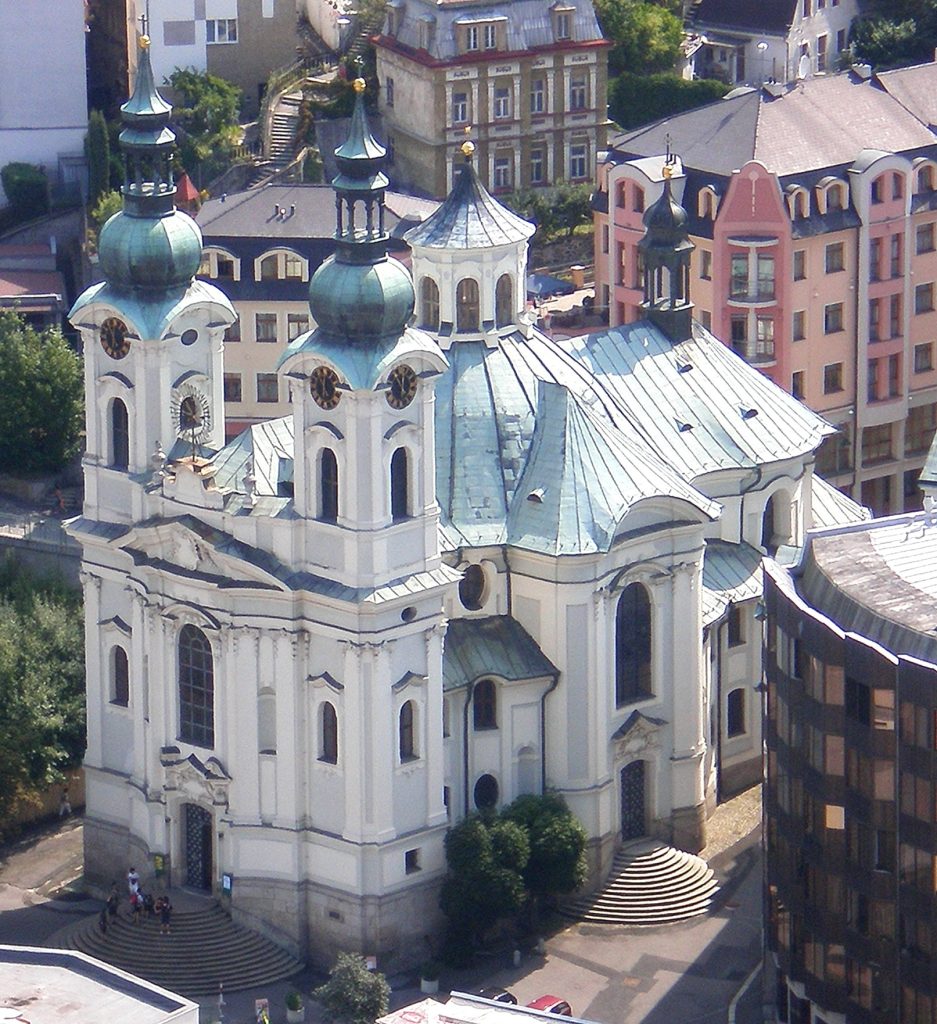
Kostel sv. Máří Magdalény patří k nejvýznamnějším památkám Karlových Varů. Původní gotický kostel vznikl ve 14. století nad Vřídlem a později prošel renesanční přestavbou. Po sérii požárů byl však ve špatném stavu, a proto byl na jeho místě v letech 1733–1736 postaven nový vrcholně barokní chrám podle návrhu slavného architekta Kiliána Ignáce Dientzenhofera.
Dnes je kostel národní kulturní památkou a návštěvníky zaujme bohatě zdobeným barokním interiérem z 18. století. Unikátní součástí chrámu je také podzemní krypta původního gotického kostela, kde jsou uloženy kosterní pozůstatky ze zrušeného hřbitova.
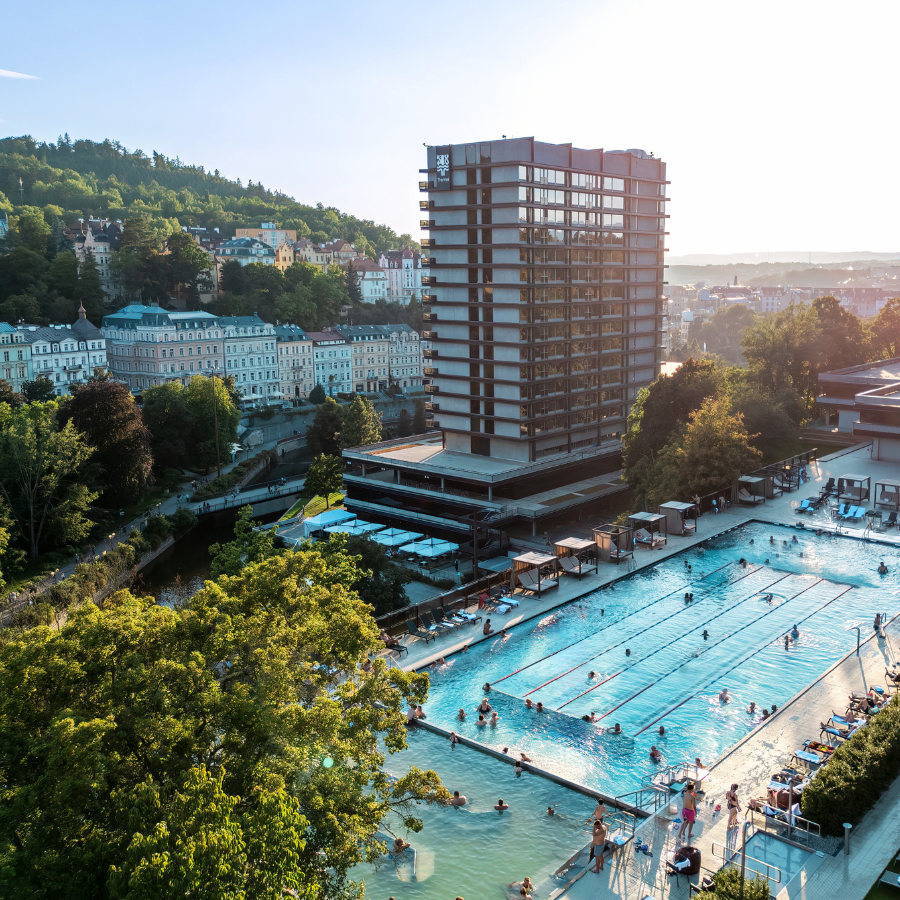
Hotel Thermal je výraznou dominantou Karlových Varů a významnou ukázkou funkcionalistické architektury. Moderní hotelový a lázeňský komplex vznikl v letech 1967–1976 podle návrhu architektů Věry a Vladimíra Machoninových. Kvůli jeho výstavbě byla zbourána část původní městské zástavby včetně několika historických budov.
Šestnáctipodlažní hotel s kongresovým centrem pro 2000 návštěvníků nabízí lázeňské i wellness služby, včetně propojení se Saunia Thermal Resort s venkovním bazénem, termální vřídelní vodou a saunovým světem. Součástí komplexu jsou také restaurace, kavárna a další zázemí. Thermal je každoročně hlavním centrem Mezinárodního filmového festivalu Karlovy Vary.
Meandr Ohře je přírodní park nacházející se v blízkosti bývalé vodárny v Tuhnicích. Rozsáhlý areál o ploše přibližně 8,7 hektaru nabízí prostor pro sport, odpočinek i pobyt v přírodě. Součástí parku jsou hřiště a sportoviště, sportovní stezka, umělé vodní nádrže i upravené zelené plochy s vegetačními prvky. Park slouží jako oblíbené místo pro rekreaci obyvatel i návštěvníků Karlových Varů.
Mattoni Arena (původně známá jako KV Arena) je moderní multifunkční, sportovně-kulturní a kongresové centrum v Karlových Varech, které bylo slavnostně otevřeno v roce 2009. Celý komplex tvoří hlavní multifunkční hala, propojená tréninková hala, hala pro míčové sporty, atletický stadion a také bazénové centrum s tobogánem a relaxační zónou. Aréna slouží jako domovský stadion extraligového hokejového klubu HC Energie Karlovy Vary. Její divácká kapacita dosahuje 5 874 míst pro hokejová utkání a při kulturních akcích či koncertech se po zakrytí ledové plochy navýší až na 7 500 diváků.
OC Varyáda is the largest shopping centre in the Karlovy Vary Region. Located in the Dvory district of Karlovy Vary, it has recently undergone extensive renovation and now serves as a modern social and shopping destination. With more than 27,000 m² of retail space, the centre offers over 110 shops focused on fashion, footwear, electronics, and home accessories.
The complex also includes more than 10 restaurants and cafés. Additional facilities include a children’s playground and the shared V Lounge space, which hosts cultural and educational lectures and events.
Vánoční dům v Doubí in Karlovy Vary is a unique year-round exhibition of Christmas ornaments and decorations. It is the only place of its kind in the Czech Republic, offering a magical Christmas atmosphere throughout the entire year. It is located in a picturesque small château in Doubí, where visitors are welcomed by rich festive decoration, inspiration, and a holiday mood.
The site also includes the stylish Angel Café, serving Christmas pastries and other treats. The exhibition is partly a sales gallery, allowing visitors to purchase selected decorations and ornaments to take home as inspiration for their own Christmas décor.
Slavkovský les vás vtáhne hlubokými lesy, rašeliništi i místy, kde na povrch vyvěrají minerální prameny. Klidná, trochu tajuplná krajina je ideální na výlet, když chcete zpomalit a být chvíli jen v přírodě.
Pomník Tomáše Garrigua Masaryka of the first Czechoslovak president Tomáš Garrigue Masaryk has stood since 2007 in front of the Glass Palace in the centre of Karlovy Vary. The work was created by Karlovy Vary academic sculptor Jan Kotek as a reminder of Masaryk’s eight stays in the local spa between 1923 and 1933.
The monument was officially unveiled on 15 September 2007, on the occasion of the 70th anniversary of the president’s death. It consists of a bronze statue of the president in larger-than-life scale placed on a low granite pedestal and is considered one of the newest monuments in the city.
Based on materials from Živý kraj – Destination Agency for the Karlovy Vary Region, z.s., and CzechTourism.