When you said Ústí nad Labem, few people would once have pictured one of the highlights of the Czech running season. Yet in 2011, a story began in northern Bohemia that would bring tens of thousands of runners from all corners of the world to the region. RunCzech was only venturing beyond Prague for the second time and staged a half marathon in the metropolis of northern Bohemia.
From Surprising Newcomer to Gold Label (2011–2015)
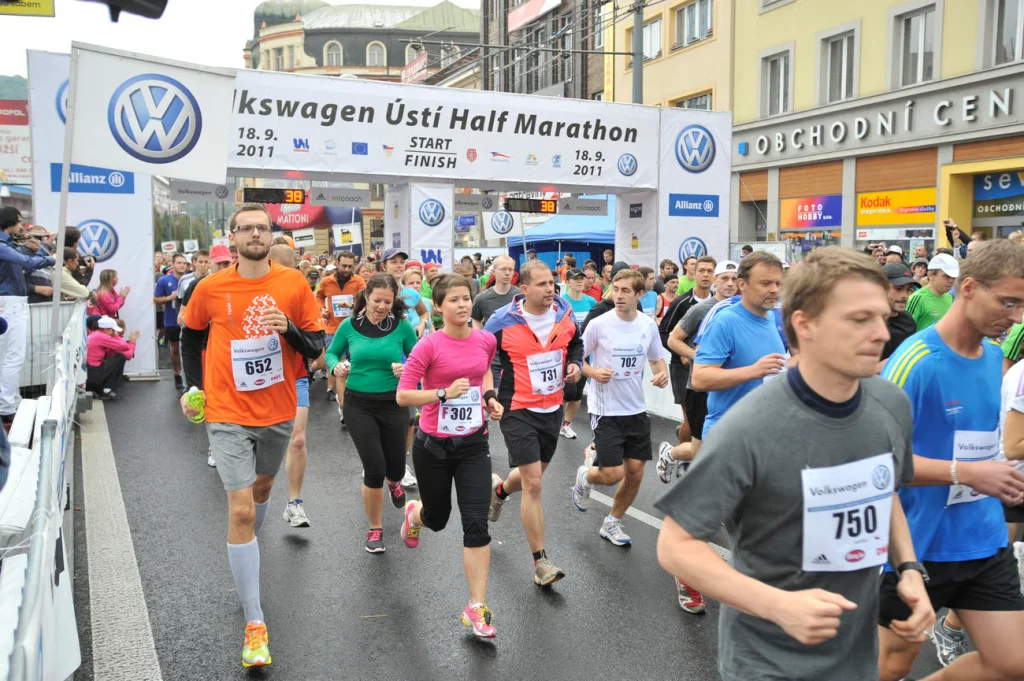
The inaugural edition in 2011 sparked enormous curiosity. For the first time, runners experienced the unique feature of the course: passing through the iconic premises of the Spolchemie industrial plant, an element that was completely unprecedented in the world of city running. The response was immediate, and just one year later interest doubled, with 3,360 participants taking to the streets. The prestige of the race was rising at a rapid pace, and for its third edition the International Association of Athletics Federations (IAAF, now World Athletics) awarded it a Silver Label. That same year, the race also opened its arms to athletes with disabilities, giving rise to the traditional para-cycling race.
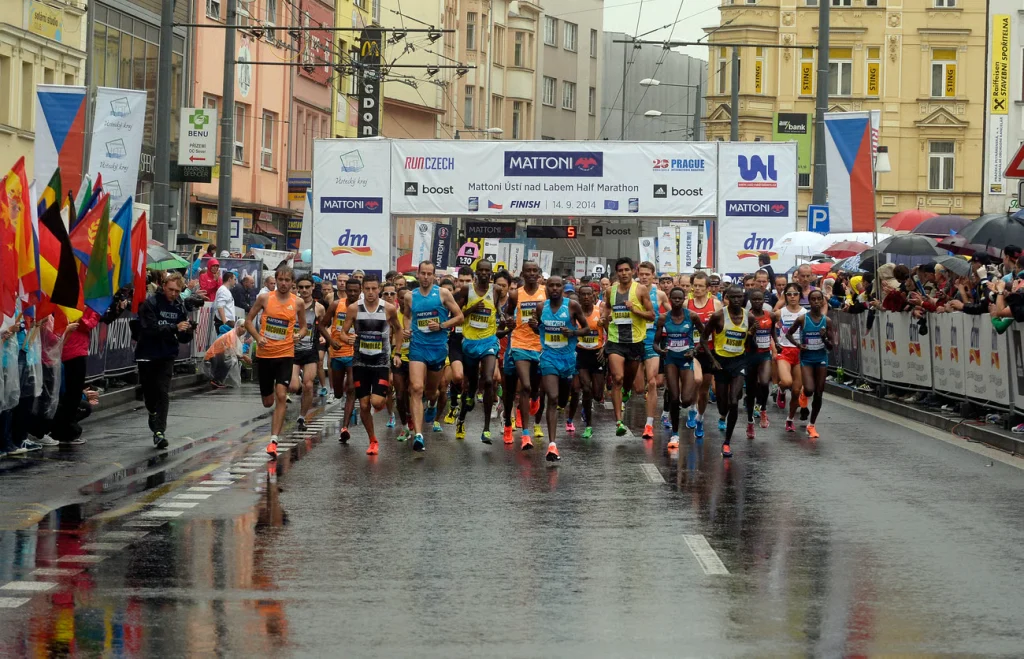
2014 brought a technological leap forward in the form of a live broadcast on Stream.cz, attracting thousands of viewers to their screens. At the same time, any scepticism about running through the chemical plant was dispelled. During the race, the Fire Rescue Service measured air quality on the premises using six different methods and found no harmful substances.
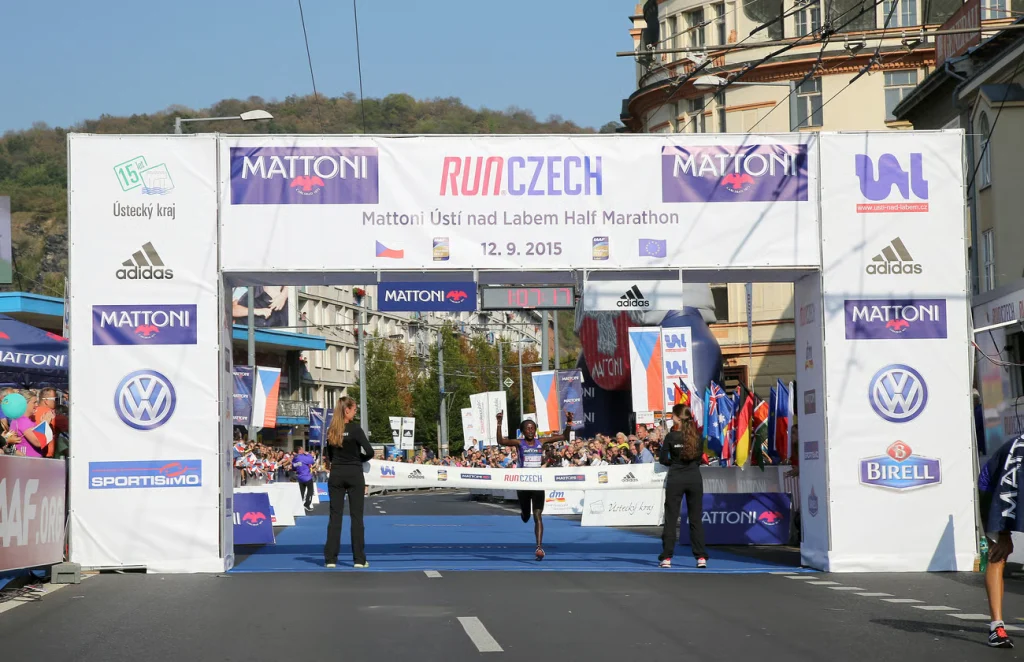
The high point of the first five years came in 2015, when Ústí nad Labem was awarded the IAAF Gold Label and became the smallest city in the world ever to receive this highest athletics accolade. Local fans were also thrilled by the fantastic running debut of Eva Vrabcová Nývltová, originally a cross-country skier, who clocked an impressive 1:12:11 in her first-ever half marathon. The overall speed of the race was underlined by Peres Jepchirchir of Kenya, a future Olympic champion and world marathon champion, four-time world half marathon champion and winner of four “majors”, who ran 1:07:17. Her time remained the women’s race record for more than 10 years, while the distance runner herself went on to become one of the world’s biggest stars and a holder of the world record in both the half marathon and marathon.
Ferrari Among Races and the Magical Sub-60-Minute Barrier (2016–2018)
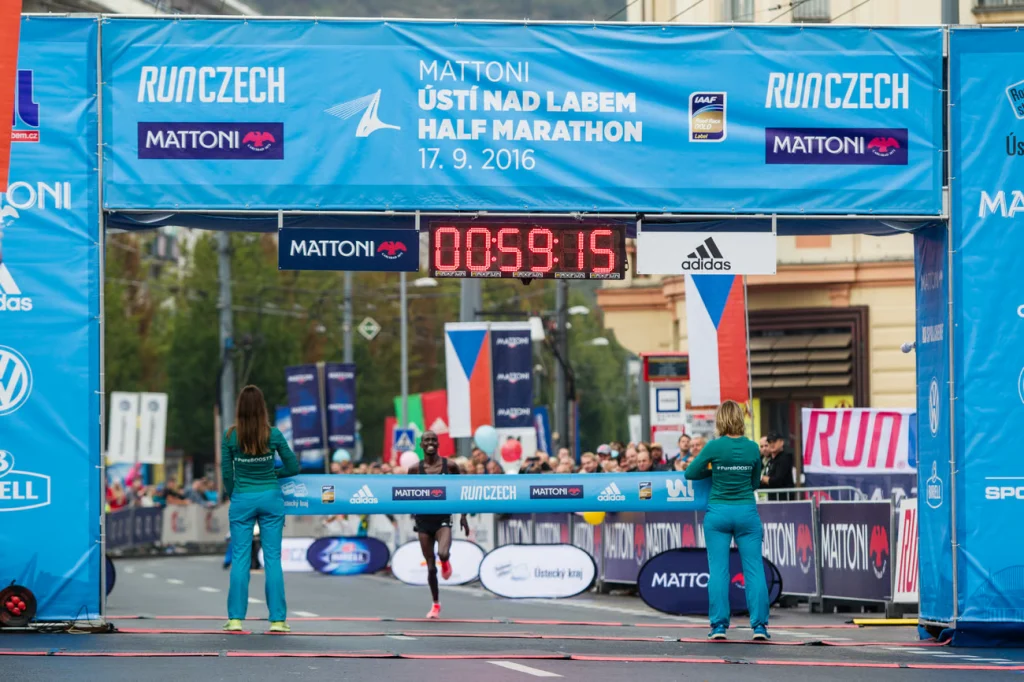
The fast, flat course along the Elbe also began attracting the world’s elite. In 2016, Kenyan Barselius Kypiego broke the magical one-hour barrier, clocking 59:15 for the fourth-fastest world time of the season. This also helped earn the Ústí course its nickname, “the Ferrari among races.” A year later, Kypiego defended his title and improved the race record by one second with a time of 0:59:14. The atmosphere of the race was also captured by director Dan Svátek, who filmed scenes here for the movie Smiles of Sad Men, based on the work of Ústí-born author Josef Formánek. That year, the para-cycling race was expanded to include a junior category.
The top-class level continued in 2018, when the 60-minute barrier was broken in the men’s category for the third consecutive year. The women’s race was dominated by Diana Kipyogei, who equalled the 2015 race record to the second. Eva Vrabcová Nývltová once again attracted attention, this time in the role of expert co-commentator for ČT Sport. The broadcast on the nationwide sports channel was yet another stamp of the race’s growing prestige. That year, Ústí also served as a springboard for the organisers’ expansion into the neighbouring region, where they announced a new autumn trail race, Liberec Nature Run.
The EuroHeroes Project and the Test of the Pandemic Crisis (2019–2021)
In 2019, the concept of the race changed fundamentally. As part of the newly established EuroHeroes project, created with the aim of supporting the development of European athletics and building local athletics stars, the Ústí half marathon hosted exclusively the elite running stars of the Old Continent. That year’s Czech Para Cycling Cup for juniors also took place as the official Czech Championships.
2020 brought the tenth anniversary edition and, with it, the toughest test in the race’s history to date: the COVID-19 pandemic. While most events around the world were being cancelled, organisers in Ústí managed to stage the race under strict hygiene measures. International elite runners and thousands of recreational runners completed their race wearing face masks at the start, with Ukrainian Bohdan-Ivan Horodyskyi winning the men’s race in 1:03:54 and Germany’s Kristina Hendel crossing the finish line in an official time of 1:13:29. In 2021, the field of starters was affected by the lingering effects of the pandemic and travel restrictions. Even so, 886 runners finished the race, with German runner Tom Gröschel lifting the winner’s trophy after clocking 1:04:10.
New European Records, a Course Challenge and a Milestone Anniversary (2022–2025)
The race returned to full strength in 2022. German national team representative Sebastian Hendel set the fastest European time in the history of the Ústí half marathon, and his 1:02:52 still stands in the race record books today. The women’s race was won by Ukraine’s Valeriia Zinenko in 1:10:55.
In 2023, Ústí hosted the dramatic finale of the entire EuroHeroes series. After an outstanding performance, Germany’s Sebastian Hendel took the victory and, with his finishing time, also surpassed series leader Khalil Choukoud by five points. Among the women, Valeriia Zinenko defended her title, beating Tereza Hrochová by six seconds. The Czech athlete, however, had no reason to be disappointed: she delivered a fantastic performance and became the very first — and to this day still the only — Czech winner of EuroHeroes.
A year later, Hungarian national team representative Gáspár Csere won in 1:06:06, while Czech Olympian Tereza Hrochová once again delivered a superb performance among the women, finishing in 1:12:01. However… It was only two days before the race itself that the decision was made that it would go ahead at all. Floods hit the Czech republic, and flood barriers were installed around the city for safety reasons, making all routes around the city more difficult and forcing drivers to head into the centre. A major stroke of luck for both the organisers and the runners was that, due to the elections, the race was held unusually on Sunday, and with the main road reopened, the city was ready. The race was therefore able to take place, and RunCzech subsequently donated all proceeds from the family runs to help deal with the aftermath of the floods.
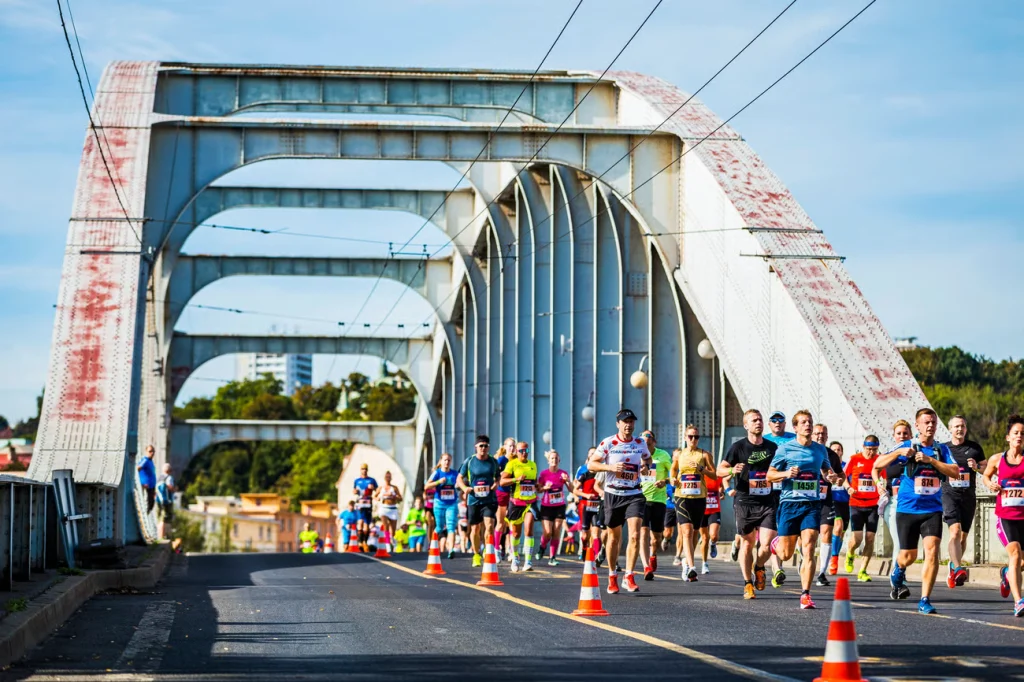
The 15th anniversary edition in 2025 brought an unexpected technical complication: extensive reconstruction and the long-term closure of the iconic Dr. Edvard Beneš Bridge made the traditional crossing of the river to Střekov impossible. The organisers had to adapt the course on short notice, moving it entirely to the right bank of the Elbe and into the industrial areas. In challenging, almost summer-like conditions, the entire EuroHeroes series once again reached its climax here. Belgian Dorian Boulvin claimed victory in 1:04:39, while among the women, Ukraine’s Valeriia Zinenko confirmed her absolute dominance on this course with her third triumph. Local fans were also delighted by the outstanding performances of the Czech national team representatives. After battling performances, Damián Vích and Tereza Hrochová both secured fantastic medal finishes. And it is the Czech national team representatives that we are looking forward to most this year as well. If they have a successful race, both can claim the overall EuroHeroes series victory.