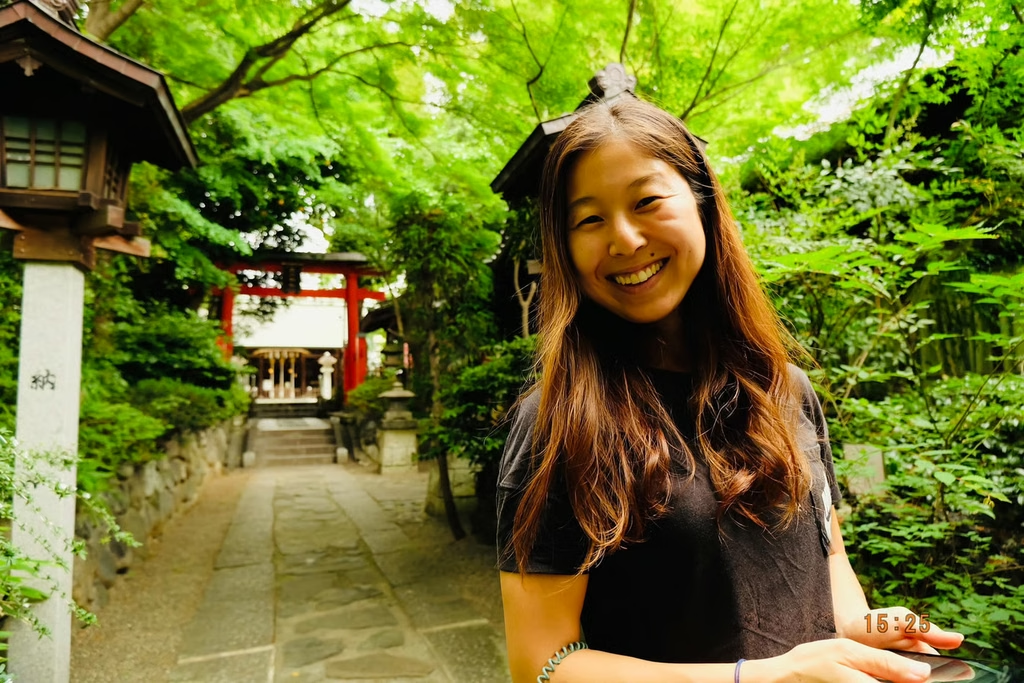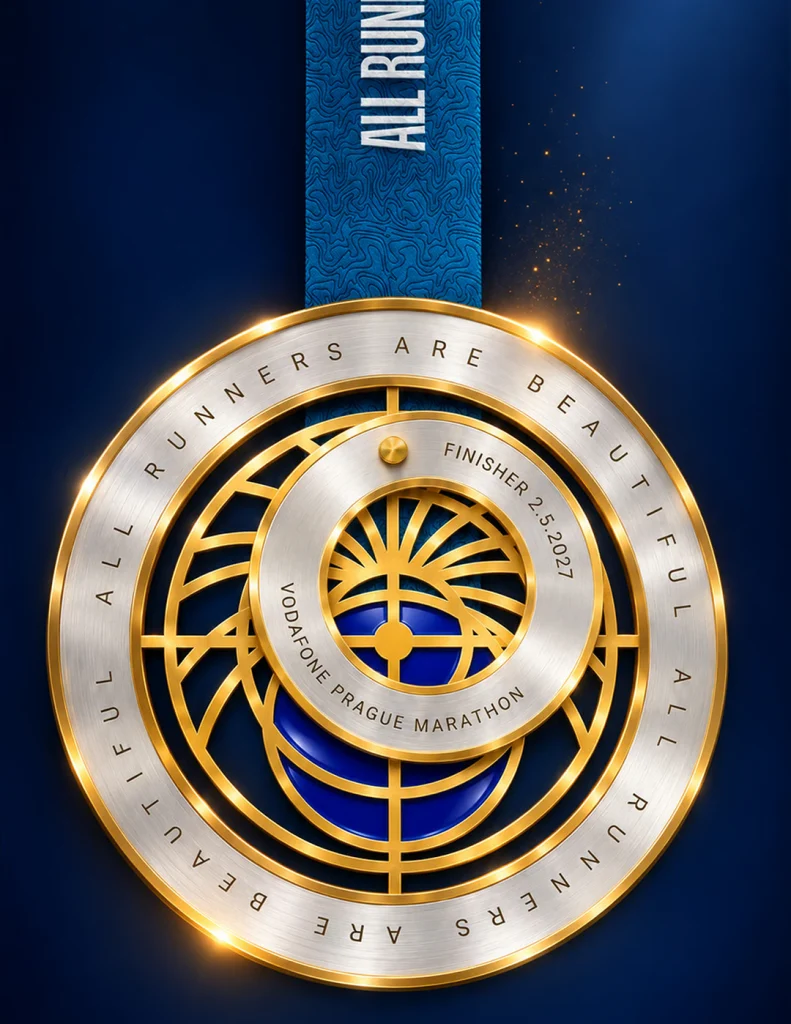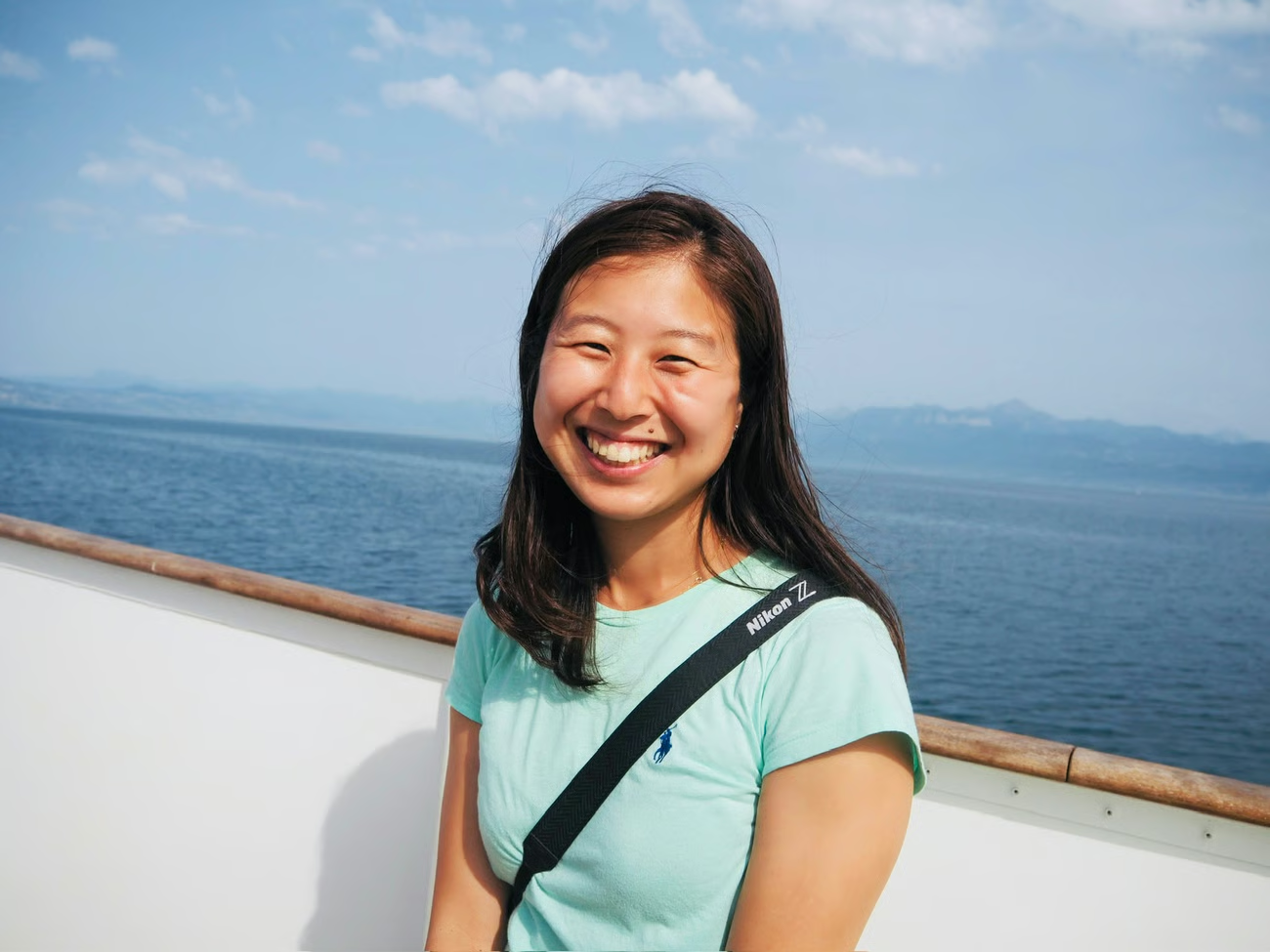
When runners cross the finish line in Old Town Square on Sunday, May 2, 2027, they will take home more than just a memory of their 42.195-kilometre journey. Around their necks, they will carry a modern reinterpretation of Prague’s iconic Astronomical Clock, created to capture both the timeless beauty of the city and every second of effort it took to earn it. We spoke with Kaede Okawa, the 31-year-old Tokyo-born designer and athlete behind the medal, about her inspiration, the true meaning of time in marathon running, and why she considers Prague a truly special place.
Hello Kaede, can you tell us what inspired this specific design and the idea behind it?
The design was inspired by Prague’s iconic Astronomical Clock in Old Town Square, one of the city’s most famous landmarks. It has been marking time for over 600 years, and for this medal, I wanted to reinterpret its historic features in a clean, modern way, creating something contemporary while still preserving the character and identity of Prague. Time holds a special meaning in marathon running, and it’s not just about the finishing time on the clock. It also represents the months of preparation, the dedication, the challenges, and all the emotions and unforgettable moments experienced along the way. I also loved the idea that, after crossing the finish line, runners could take home a little piece of Prague’s history – their very own version of the Astronomical Clock, transformed into a medal.
Why did you choose the Astronomical Clock from Old Town Square? Is it meant to symbolize the start and finish line of the marathon?
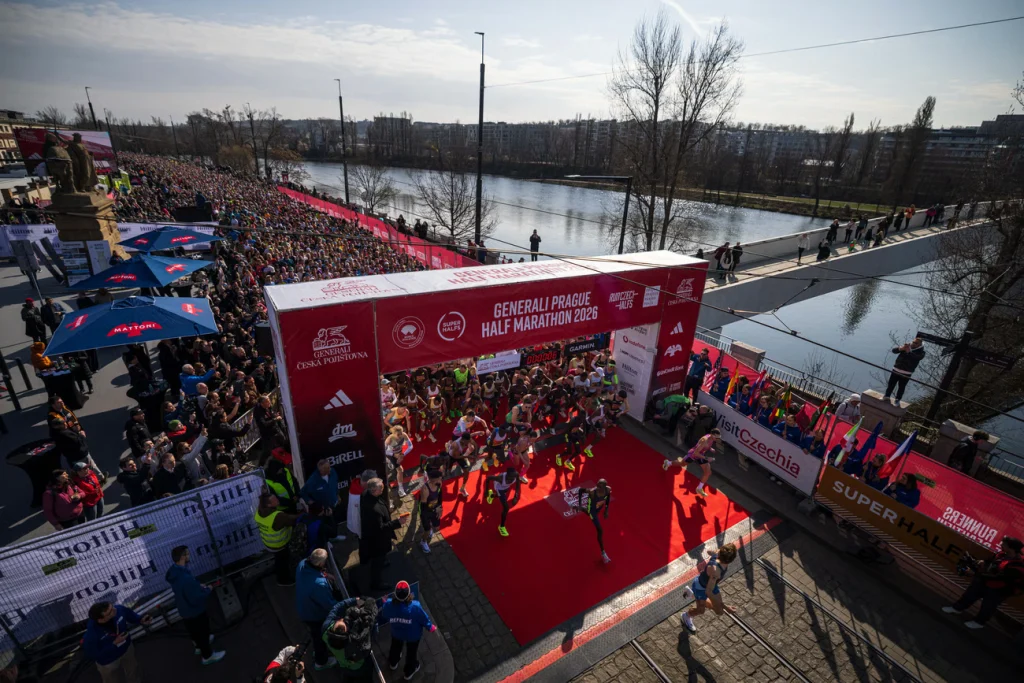
Absolutely. Old Town Square is where runners begin their marathon journey, and where they return to cross the finish line at the end of the race. For centuries, the Astronomical Clock has stood there, witnessing the history of Prague. Today, it also witnesses the excitement, emotions, and achievements of thousands of marathon runners. What I find particularly beautiful is that the clock remains in the same place, marking time as it has for centuries, while every year, new runners arrive with their own dreams, goals, and stories. Some runners are visiting Prague for the very first time, while others return year after year. Some are chasing personal bests, while others simply want to enjoy the beautiful city and experience the marathon at their own pace.
Is this the first medal you designed for RunCzech?
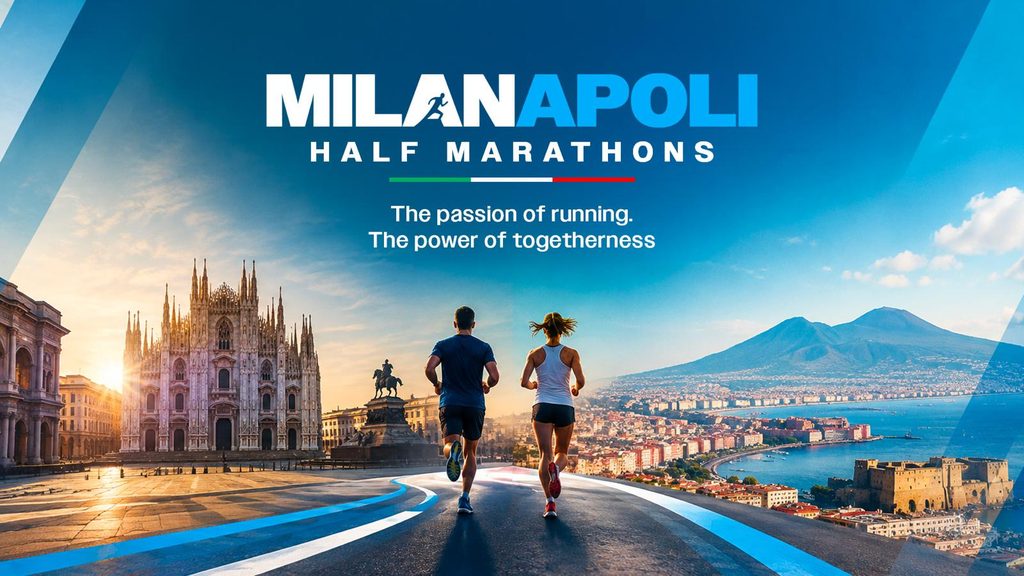
No, I’ve already designed several medals for RunCzech, including those for the Valentine’s Run, the Birell Grand Prix 5K and 10K, the Prague Relay, Liberec, and the Family Runs. Through Napoli Running, I’ve also designed medals for the Napoli City Half Marathon and MilaNapoli, drawing inspiration from the vibrant energy, natural beauty, and unique character of Naples. Each race and city has its own identity and story. For me, the challenge is not simply to create something visually attractive, but to translate those unique characteristics into something meaningful that runners will treasure for years to come.
What is your regular work for RunCzech? Just to give everyday runners an idea of what else they might recognize from your work.
My work at RunCzech covers a wide range of creative projects, from medal design to campaign visuals, race T-shirts, apparel, and merchandise. Through international projects such as Napoli Running, I also have the opportunity to design for cities with distinct cultures and personalities. I’m truly grateful to RunCzech for giving me such an international environment in which to grow as a designer. What I really enjoy is that design becomes part of the entire race experience. From the moment someone sees a campaign visual and decides to register, to the moment they put on their race T-shirt, cross the finish line, and take their medal home, design accompanies them throughout their journey. Being able to contribute to those experiences is what makes my work so rewarding.
Have you read the comments about the medal and seen how people reacted? Does it make you proud?
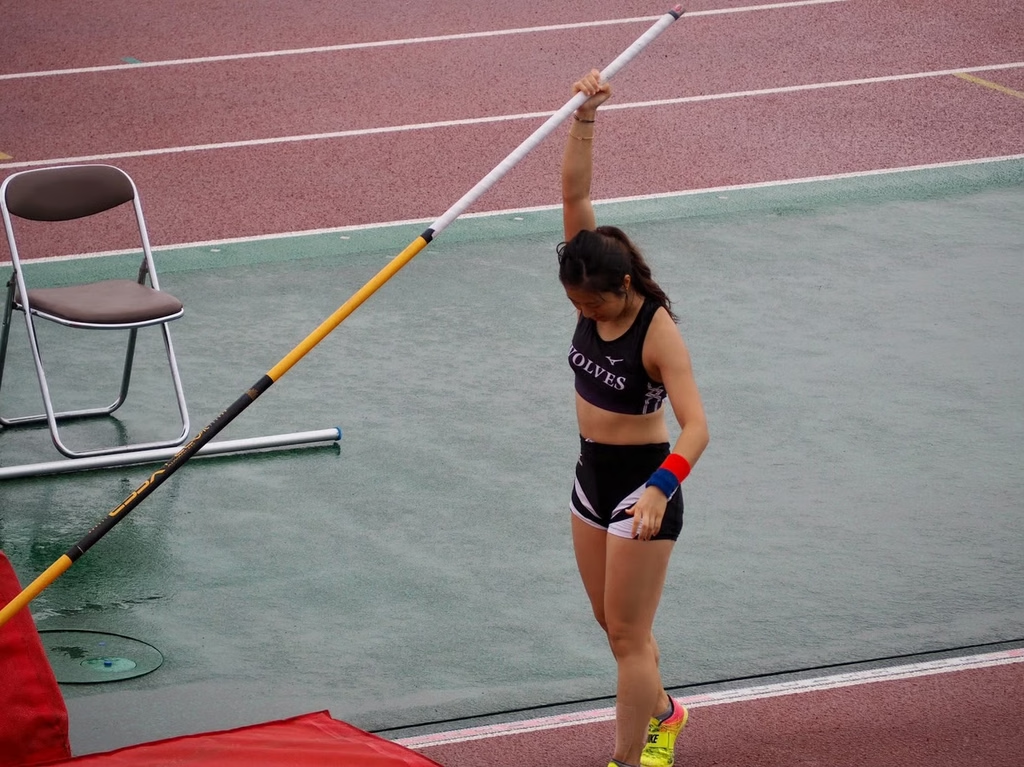
Yes, of course! I’ve been reading the comments, and I’m really glad to see such positive reactions. As a designer, it’s wonderful to receive great feedback on the visual design itself. But as an athlete, I understand what it means to work towards a goal, including the happiness, struggles, and sacrifices that come with that journey. That’s why I see a medal as much more than just a symbol of finishing a race. It represents all the time, effort, and emotions a runner has invested to reach that moment. Knowing that something I’ve designed can motivate someone to train harder, take on a new challenge, and finally celebrate with it after crossing the finish line is the most rewarding part of my job.
You originally come from Japan. What brought you to Prague, and how has living here shaped your view of the city and its marathon?
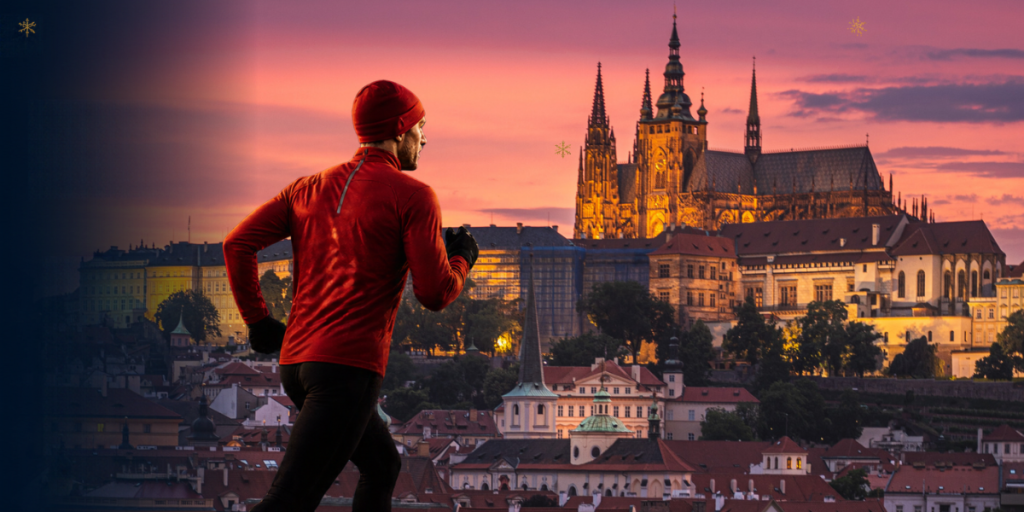
I’ve been living in Prague since July 2025, so it’s been about a year and a half. Growing up in Tokyo, I always admired European culture and architecture, and studying abroad in Helsinki later inspired me to explore over 20 countries across Europe. Out of all the places I’ve visited, Prague stands out for how wonderfully its historic streets and architecture have been preserved. Living here has made me realise how special it is to run a marathon through such a city. While the Tokyo Marathon is known for fast racing on wide, modern roads, Prague offers something completely different: the chance to run 42.195 kilometres surrounded by centuries of history and a truly unique atmosphere.
Is there anything else you would like to tell us?
As both a designer and an athlete, I feel incredibly fortunate to combine two of my greatest passions: design and sport. What makes my work truly meaningful is knowing that something I create can become part of someone else’s unforgettable memories. Every runner has their own story, and I’m grateful that my designs can play a small part in it. I look forward to seeing all the runners in Prague, creating their own special moments!